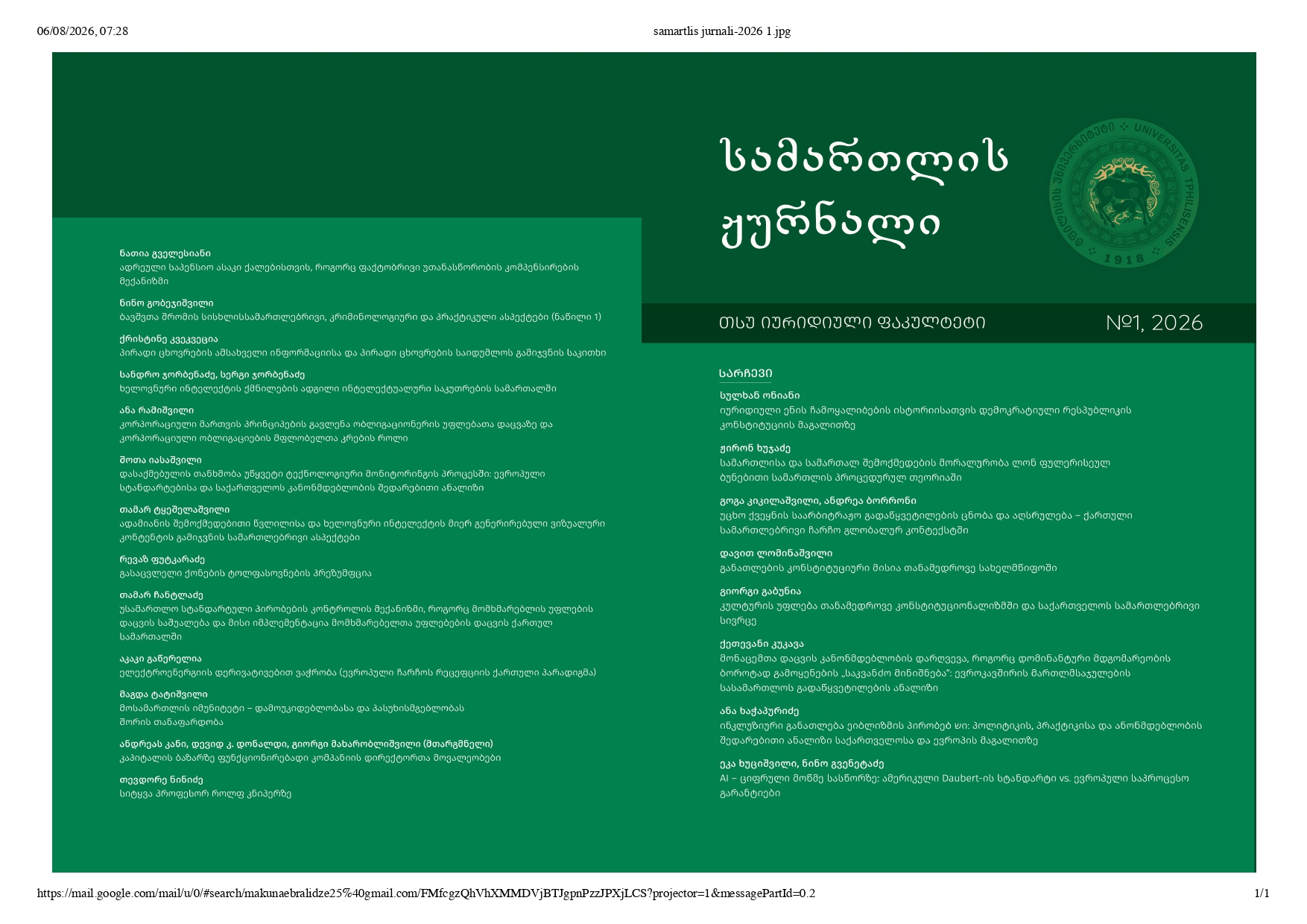
პირადი ცხოვრების ამსახველი ინფორმაციისა და პირადი ცხოვრების საიდუმლოს გამიჯვნის საკითხი
DOI:
https://doi.org/10.60131/jlaw.1.2026.11878საკვანძო სიტყვები:
პირადი ცხოვრება, პირადი ცხოვრების ხელშეუხებლობა, პირადი ცხოვრების ამსახველი ინფორმაცია, პირადი ცხოვრების საიდუმლო.ანოტაცია
პირადი ცხოვრების ხელშეუხებლობის დაცვა ადამიანის უფლებათა შორის ერთ-ერთი ყველაზე ფართო დიაპაზონის მქონე უფლებაა, რომლის ამომწურავ განმარტებას არც კანონმდებლობა და არც იურიდიული დოქტრინა არ იძლევა.
საქართველოს სისხლის სამართლის კოდექსში პირადი ცხოვრების დაცვას არაერთი მუხლი ეძღვნება, თუმცა, მათ შორის, სსკ-ის 157-ე და 1571 მუხლები ერთმანეთთან ყველაზე ახლო მდგომი მუხლებია, რომელთაგან ერთ შემთხვევაში დაცვის საგანს პირადი ცხოვრების ამსახველი ინფორმაცია, ხოლო მეორე შემთხვევაში პირადი ცხოვრების საიდუმლო წარმოადგენს. მათ შორის ზღვრის გავლებას თეორიულთან ერთად უდიდესი პრაქტიკული დანიშნულება აქვს, რადგან აღნიშნული მუხლებისთვის დაწესებული სანქციები მკვეთრად განსხვავდება ერთმანეთისგან.
მოცემულ ნაშრომში კანონმდებლობის, იურიდიული დოქტრინის და სასამართლო გადაწყვეტილებების საფუძველზე მიმოხილული იქნება, თუ რა საკითხები შეიძლება მივაკუთვნოთ პირადი ცხოვრების ამსახველ ინფორმაციას და რა პირადი ცხოვრების საიდუმლოს.
ლიტერატურა / წყაროების მითითება
1. Constitution of Georgia, Parliament of Georgia, 24 August 1995 (In Georgian).
2. Criminal Code of Georgia, Parliament of Georgia, 22 July 1999 (In Georgian).
3. European Convention for the Protection of Human Rights and Fundamental Freedoms, Rome, 1950.
4. Law of Georgia on Personal Data Protection, Legislative Herald of Georgia, 14 June 2023 (In Georgian).
5. Law of Georgia on Amendments to the Criminal Code of Georgia, Legislative Herald of Georgia, 3 June 2016 (In Georgian).
6. Explanatory Note to the Draft Law of Georgia on Amendments to the Criminal Code of Georgia <https://info.parliament.ge/file/1/BillReviewContent/115383> [24 March 2026] (In Georgian).
7. Bichia M., “The Idea of Privacy Protection from Its Origin to the Present Day,” in: Revaz Gogshalidze 65, Khrustali V., Mefarishvili G. (eds.), Tbilisi, 2022, p. 453 (In Georgian).
8. Bokhashvili, B., Khutsishvili, K., Case Law of the European Court of Human Rights, Tbilisi, 2004, 260 (In Georgian).
9. Dvalidze I., Crimes against Human Rights and Freedoms According to the Criminal Code of Georgia (Commentary), Tbilisi, 2019, 397, 419–422 (In Georgian).
10. Todua N., Criminal Law – Special Part, Crimes Against the Person, Book I, Part I, 8th ed., Tbilisi, 2023, 487–488, 492 (In Georgian).
11. Korkelia, K., Kurdadze, I., International Human Rights Law according to the European Convention on Human Rights, Tbilisi, 2004, 155–196 (In Georgian).
12. Kublashvili, K., Fundamental Human Rights and Freedoms, 6th ed., Tbilisi, 2022, 101–102 (In Georgian).
13. Public Defender (Ombudsman) of Georgia, Report on the Situation of Protection of Human Rights and Freedoms in Georgia, Tbilisi, 2016, 408-409 (In Georgian).
14. Skhirtladze N., Legal Aspects of Personal Data Protection, Tbilisi, 2017, p. 155 (In Georgian).
15. Judgment of the Zugdidi District Court of 5 August 2025, No 1/359 25 (In Georgian).
16. Judgment of the Tbilisi City Court of 12 March 2025, No 1 483 25 (In Georgian).
17. Judgment of the Kutaisi City Court of 16 July 2024, No 1/25 24 (In Georgian).
18. Judgmen of the Kutaisi Court of Appeal of 4 July 2024, No 1/b 802 22 (In Georgian).
19. Judgment of the Tbilisi City Court of 5 December 2023, No 1/4561 23 (In Georgian).
20. Judgment of the Zugdidi District Court of 19 September 2023, No 1/446 22 (In Georgian).
21. Judgment of the Tbilisi City Court of 13 September 2023, No 1/2623 23 (In Georgian).
22. Decision of the Supreme Court of Georgia of 21 March 2023, No 1112ap 22 (In Georgian).
23. Judgment of the Supreme Court of Georgia of 2 March 2023, No 850ap 22 (In Georgian).
24. Judgment of the Khelvachauri District Court of 6 August 2022, No 820100121005324930 (In Georgian).
25. Judgment of the Kutaisi Court of Appeal of 10 June 2022, No 1/b 137 2020 (In Georgian).
26. Judgment of the Tbilisi City Court of 30 October 2020, No 1/2878 20 (In Georgian).
27. Judgment of the Akhaltsikhe District Court of 6 May 2020, No 3575778 1/075 20 (In Georgian).
28. Judgment of the Tbilisi City Court of 11 November 2019, No 1/3219 19 (In Georgian).
29. Judgment of the Khelvachauri District Court of 11 September 2019, No 1 108/2019 (In Georgian).
30. Judgment of the Tbilisi City Court of 25 February 2019, No 1/3206 18 (In Georgian).
31. Aichinger W., Fuchs E. (Hrsg.), Geheimnis und Geheimhaltung. Themen der Geschichte, Historische Sozialkunde 45/3, VGS, Wien 2015, 4, 5.
32. Fomina, L.Yu., Protection of the Right to Respect for Private and Family Life in European Court of Human Rights, European Research Studies Journal, Vol. XIX, Issue 3B, 2016, 101-102.
33. Holvast J., History of privacy, In: The History of Information Security, 1st ed., A Comprehensive Handbook, Editors: Leeuw K. de and Bergstra J., 2007, 741-742. doi:10.1016/b978-044451608-4/50028-6.
34. BeckOK StGB/Heuchemer, 67. Ed. 1.11.2025, StGB § 201a Rn. 11.3, 18, 53.
35. Gerhalter, L., Konventionelle Geheimnisse Tagebücher von Jugendlichen in der ersten Hälfte des 20 Jahrhunderts, Historische Sozialkunde 45/3, VGS, Wien 2015. 26.
36. Ortega Ortega v. Spain, № 44448/20, 22.10.2024, §53.
37. López Ribalda and Others v. Spain [GC], №1874/13 and 8567/13, 17.10.2019. §§ 87-89.
38. Couderc and Hachette Filipacchi Associés v. France, №40454/07, 10.11.2015, § 123.
39. Von Hannover v. Germany no. 59320/00, 24.06.2004, § 68.
40. Campmany and Lopez Galiacho Perona v. Spain (dec.), no. 54224/00, ECHR 2000‑XII
41. Niemietz v. Germany, №13710/88, 16.12.1992, §29.
42. Bundesverfassungsgericht, Judgment of the First Senate, 26 February 2008, 1 BvR 1602/07, 1 BvR 1606/07, 1 BvR 1626/07 §47.
გამოქვეყნებული
ციტირების წესი
გამოცემა
სექცია
ლიცენზია

This work is licensed under a Creative Commons Attribution-ShareAlike 4.0 International License.