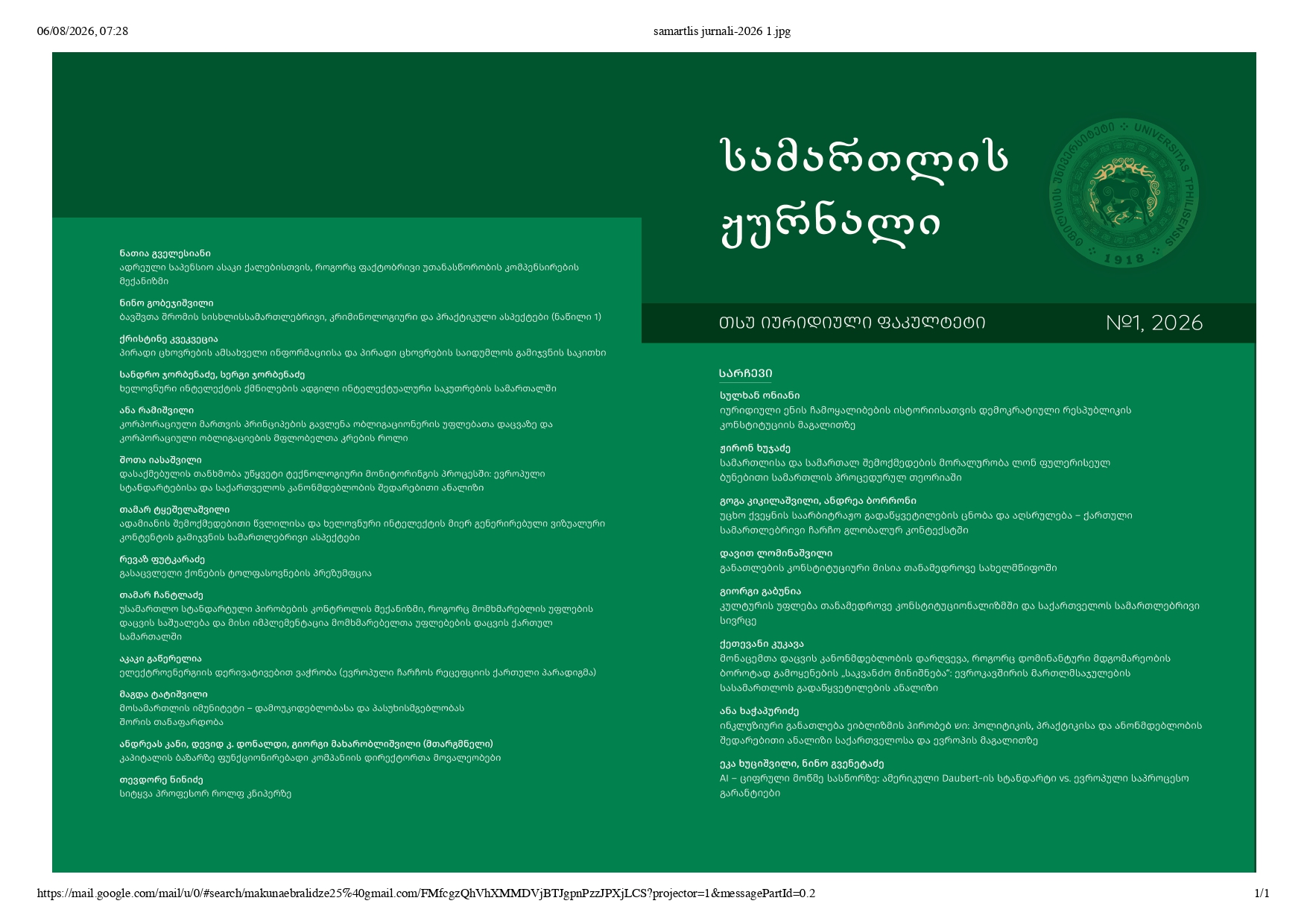
ადრეული საპენსიო ასაკი ქალებისთვის, როგორც ფაქტობრივი უთანასწორობის კომპენსირების მექანიზმი
DOI:
https://doi.org/10.60131/jlaw.1.2026.11874საკვანძო სიტყვები:
ასაკით პენსია, საპენსიო ასაკი, de facto თანასწორობა, დროებითი სპეციალური ზომები, ხანდაზმულ ქალთა უფლებები, სქესთა შორის სახელფასო სხვაობა, აუნაზრაურებელი შრომა.ანოტაცია
ქალისა და მამაკაცის უნარებისა და შესაძლებლობების თანაბარი რეალიზაცია გამოწვევაა არა მხოლოდ საქართველოში, არამედ განვითარებული დემოკრატიის ქვეყნებშიც. სოციალურ და კულტურულ მიკროკლიმატში თვითნებურად აღმართული ხელისშემშლელი გარემოებები აბრკოლებს სქესთა შორის de jure, ანუ ფორმალურ-სამართლებრივი თანასწორობის de facto, ანუ რეალურ, არსებით თანასწორობაში ტრანსლირებას. როდესაც ქვეყანაში შექმნილი სოციალური გარემოდან გამომდინარე, ქალისა და მამაკაცის თანასწორობასთან დაკავშირებული სამართლებრივი და ფაქტობრივი რეალობა არ არის სინქრონიზებული, წარმოიშობა წამახალისებელი ჩარევების გზით სქესის ნიშნით განსხვავებული მოპყრობის დროებითი დაწესების აუცილებლობა. სწორედ ქალების მიმართ არსებული სოციალურ-ეკონომიკური უთანასწორობა განაპირობებს დიფერენცირებულ საპენსიო ასაკს. სქესთა შორის განსხვავებულ ასაკით პენსიას აქვს ისტორიული, სოციალური, კულტურული და ეკონომიკური წანამძვრები და დინამიკური და ევოლუციური განვითარების შედეგად წინ მიიწევს გათანაბრებისკენ. სტატიაში გაანალიზებულია ქალისა და მამაკაცისათვის დაწესებული განსხვავებული საპენსიო ასაკის შესაბამისობა თანასწორობის უფლებასთან, წინაპირობები რომლებიც ამართლებს დიფერენციაციის შემოღებას, შეფასების რა სახის პარამეტრები გამოიყენება ევროპულ დონეზე და რამდენად არსებობს საქართველოში სქესზე დაფუძნებული განსხვავებული ასაკით პენსიის შენარჩუნების მწვავე საზოგადოებრივი საჭიროება.
ლიტერატურა / წყაროების მითითება
1. Constitution of Georgia, Departments of Parliament, 31-33, 24/08/1995.
2. Georgian Law on “State Pensions”, LHG, 56, 28/12/2005.
3. Ruling No. 2/7/1258 of 22 February 2018 of the Constitutional Court of Georgia in the case “Citizen of Georgia Giorgi Vashadze v. Parliament of Georgia”.
4. Operational Record No. 1/7/1320 of the Constitutional Court of Georgia dated 5 June 2020 in the case “Elga Maisuradze, Irma Ginturi, and Leri Todadze v. the Parliament of Georgia”.
5. Judgement No. 3/3/1526 of the Constitutional Court of Georgia dated 25 September 2020 in the case “NGO Political Association of Citizens “New Political Center”, Herman Sabo, Zurab Girchi Japaridze, and Ana Chikovani v. the Parliament of Georgia”.
6. Recording Notice No. 2/6/1609 of 23 December 2022 of the Constitutional Court of Georgia in the case “Budu Shekiladze v. Parliament of Georgia”.
7. The online broadcast of the Constitutional Court of Georgia in the case “Budu Shejiladze v. the Parliament of Georgia”.
8. The “amicus curiae” opinion submitted to the Constitutional Court of Georgia in the case “Budu Shekiladze v. Parliament of Georgia” on May 25, 2023, by the NGO “Georgian Young Lawyers’ Association” and the NGO “Safar”.
9. Convention on the Elimination of All Forms of Discrimination against Women, 1979.
10.Women spend five times more on unpaid care work compared to men in Georgia, <https://georgia.unwomen.org/ka/stories/akhali-ambebi/2022/12/sakartveloshi-aunazghaurebel-zrunvis-shromas-kalebi-5-jer-met-dros-utmoben-vidre-katsebi (In Georgian).
11. UN Women, Time to Care: Women’s Unpaid Care Work and the Inequality Crisis in Georgia (In Georgian).
12.Why does the retirement age differ between women and men in Georgia? <https://www.allnews.ge/ekonomika/155436-ratom-gansxvavdeba-kalisa-da-mamakacis-sapensio-asaki-sakartveloshi/ (In Georgian).
13. National Statistics Office of Georgia, Women and Men in Georgia, Statistical Publication, 2025 (In Georgian).
14. Gender Impact Assessment of Labor Law Reform, Gender Equality Council of the Parliament of Georgia, 2017 (In Georgian).
15. Council Directive (79/7/EEC) of 19 December 1978 on the Progressive Implementation of the Principle of Equal Treatment for Men and Women in Matters of Social Security.
16. Arza C., the Gender Dimensions of Pension Systems, Policies and Constraints for the Protection of Older Women, 2015
17. Barigozzi F., Cremer H., Lozachmeur J.-M., Gender wage and longevity gaps and the design of retirement systems, January 2021, revised February 2023.
18. Ciminelli G., Schwellnus C., Stadler B., Sticky Floors or Glass Ceilings? The Role of Human Capital, Working Time Flexibility and Discrimination in the Gender Wage Gap, OECD Economics Department Working Papers No. 1668, 2021.
19. Jamieson J., Ling Z., Mehta K., Howell J., the ‘Second Shift’ in Emergency Medicine: Strengths and Barriers of the Gendered Double Burden, Emergency Medicine Australasia37, no. 5 (2025).
20. Moraru and Marin v. Romania, [2023] ECHR.
21. C-614/11 Niederösterreichische Landes-Landwirtschaftskammer v Anneliese Kuso, [2013], ECR, CJEU.
22. C-356/09, Pensionsversicherungsanstalt v Christine Kleist, [2010], ECR, CJEU.
23. Stec and Others v. the United Kingdom, [2006] ECHR.
24. C-152/84, M. H. Marshall v. Southampton and South-West Hampshire Area Health Authority (Teaching), [1986], ECR, CJEU.
25. CiberCuba Editorial Team, https://en.cibercuba.com/noticias/2025-07-31-u1-e208933-s27061-nid308139-gobierno-cubano-ratifica-edad-jubilacion.
26. EIGE, Gender Equality Index 2025, Sharper Data for a Changing World, Publications Office of the European Union, Luxembourg, 2025.
27. EIGE, Gender in Poverty and Social Inclusion, Publications Office of the European Union, Luxembourg, 2016.
28. European Commission, 2025 Report on Gender Equality in the EU, 2025.
29. Kellner G., “What is the Retirement Age for Women?“, 2022. <https://retirable.com/advice/lifestyle/retirement-age-for-women.
31. NCPSSM, “Women and Retirement: The Gender Gap Persists: Why Women Face a Gender Gap in Retirement Savings”, 2021, https://www.ncpssm.org/documents/issue-briefs/women-and-retirement-the-gender-gap-persists/.
32. Pensions at a Glance 2025, OECD and G20 Indicators, OECD Publishing, Paris.
33. Report on the Gender Pay and Pension Gap in the EU: State of Play, Challenges and the Way Forward, and Developing Guidelines for the Better Evaluation and Fairer Remuneration of Work in Female-dominated Sectors, 2016, https://www.europarl.europa.eu/doceo/document/A-10-2026-0021_EN.html.
34. Service of the Republic of Poland, <https://www.gov.pl/web/your-europe/old-age-pension--step-by-step#:~:text=When%20can%20a%20person%20retire,part%20and%20an%20individual%20part
35. Thane P., The ‘scandal’ of women’s pensions in Britain: how did it come about?, https://www.historyandpolicy.org/policy-papers/papers/the-scandal-of-womens-pensions-in-britain-how-did-it-come-about.
36. The Pensions System in Austria – an Overview, Vienna, Edition for 2025, Federal Ministry of Social Affairs, Health, Care and Consumer Protection (BMSGPK).
37. Trading Economics, https://tradingeconomics.com/chile/retirement-age-men.
38. UN CEDAW, General recommendation No. 17: Measurement and quantification of the unremunerated domestic activities of women and their recognition in the gross national product, 1991.
39. UN CEDAW /C/GC/29, General recommendation on article 16 of the Convention on the Elimination of All Forms of Discrimination against Women (Economic consequences of marriage, family relations and their dissolution), 2013.
40. UN CEDAW /C/GC/27, General recommendation No. 27 on older women and protection of their human rights, 2010.
41. UN CEDAW, General Recommendation no. 25: Article 4, paragraph 1 of the Convention (temporary special measures), 2004.
42. UN Women, Everything you need to know about pushing for pay equity, 2025, https://knowledge.unwomen.org/en/articles/explainer/everything-you-need-to-know-about-pushing-for-pay-equity.
43. UN Women, Protecting Women’s Income Security in Old Age, Toward Gender-Responsive Pension Systems, Policy Brief NO. 3.
გამოქვეყნებული
ციტირების წესი
გამოცემა
სექცია
ლიცენზია

This work is licensed under a Creative Commons Attribution-ShareAlike 4.0 International License.