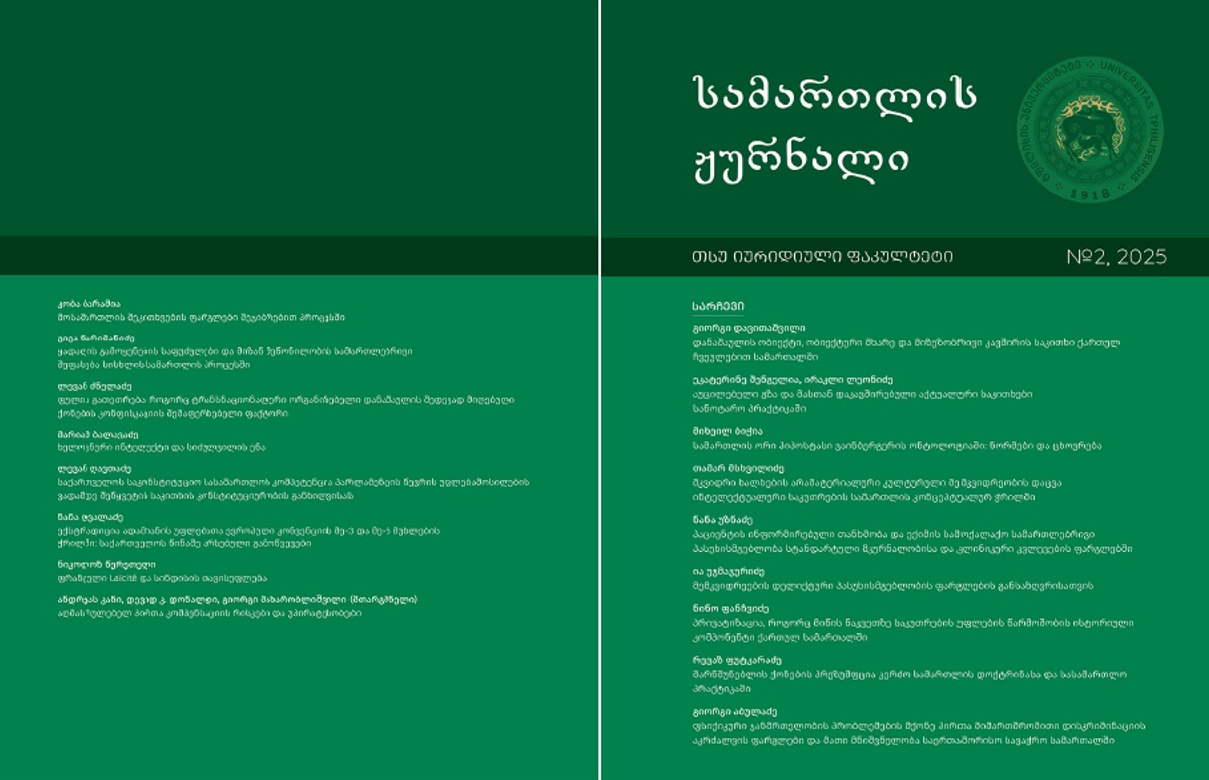
ხელოვნური ინტელექტი და სიძულვილის ენა
DOI:
https://doi.org/10.60131/jlaw.2.2025.10705საკვანძო სიტყვები:
სიძულვილის ენა, ხელოვნური ინტელექტი, გამოხატვის თავისუფლება, დისკრიმინაცია.ანოტაცია
მთელი მსოფლიოს მასშტაბით, დღითი დღე იმატებს სიძულვილის ენის გამოყენების მაჩვენებელი. ტექნოლოგიის განვითარებასთან ერთად, განსაკუთრებით საყურადღებო ხდება სოციალური ქსელებისა თუ კომუნიკაციის სხვა ფორმებით გამოხატული სიძულვილის ენა, რომელიც შუღლს აღვივებს საზოგადოების სხვადასხვა ჯგუფს შორის. სიძულვილის ენა გამოირჩევა სწრაფი ესკალაციით, იგი მარტივად შეიძლება გადაიზარდოს სიძულვილით მოტივირებულ დანაშაულში და სწორედ ამიტომ, მნიშვნელოვანია, მასზე სწრაფი და ეფექტიანი რეაგირება ისე, რომ არ დაირღვეს გამოხატვის თავისუფლება.
ციფრული სამყაროს განვითარებასთან ერთად, იზრდება ხელოვნური ინტელექტის გამოყენების მაჩვენებელიც. აღნიშნულმა გარემოებამ კი საჭირო გახადა ხელოვნური ინტელექტისა და სიძულვილის ენის ურთიერთმიმართების შესწავლა. კერძოდ, კვლევის მიზანია, გაანალიზოს ხელოვნური ინტელექტის გავლენა სიძულვილის ენის გავრცელებასა და რეგულირებაზე ციფრულ სივრცეში. ნაშრომი იკვლევს, თუ როგორ ცვლის ხელოვნური ინტელექტი სიძულვილის ენის დინამიკას და გამოხატვის თავისუფლების საზღვრებს. კვლევის ფარგლებში დადგენილია თუ რა სამართლებრივი ღონისძიებების გატარებაა საჭირო ახალ ტექნოლოგიურ რეალობასთან მორგების მიზნით.
წინამდებარე სტატიაში განხილულია სიძულვილის ენის არსი და მნიშვნელობა, საერთაშორისო და ადგილობრივი სამართლებრივი ჩარჩო, რომელიც არეგულირებს სიძულვილის ენის გამოყენების შესაძლებლობას, ხელოვნური ინტელექტის სამართლებრივი რეგულირება და მისი გამოყენებისას დისკრიმინაციის აკრძალვის პრინციპი, ასევე, ადამიანის უფლებათა ევროპული სასამართლოს გადაწყვეტილებები სიძულვილის ენისა და ხელოვნური ინტელექტის გამოყენებასთან დაკავშირებით.
ლიტერატურა / წყაროების მითითება
1. Areshidze M., Artificial Intelligence in Criminal Justice, Justice and Law №2(82), 2024, 154.
2. Gabisonia Z., National Artificial Intelligence Strategy for Georgia, Georgian-German Journal of Comparative Law, 8/2021, 24.
3. Gvaramadze T., Human Rights and Artificial Intelligence, Burduli I. (ed.), Journal of Law №2, Tbilisi, 2024, 147, 149.
4. Goderdzishvili N., Artificial Intelligence: Essence, International Standards, Ethical Norms and Recommendations, Institute for the Development of Freedom of Information, Tbilisi, 2021, 10.
5. Mgeladze M., Gorgoshadze M., Issues of legal regulation of the extension of some human rights to high artificial intelligence and robots, Constitutional Law Journal, Publication №1, 2019, 65.
6. Tartarashvili T., Pirtskhalaishvili N., Hate Speech, Tbilisi, 2017, 4.
7. Artificial Intelligence Act, 13/06/2024, https://eur-lex.europa.eu/legal-content/EN/TXT/PDF/?uri=OJ:L_202401689 [21.08.2025].
8. Convention on Artificial Intelligence and Human Rights, Democracy and the Rule of Law, 17/05/2024, https://rm.coe.int/1680afae3c [21.08.2025].
9. International Covenant on Civil and Political Rights, 1966, 20, https://www.ohchr.org/en/instruments-mechanisms/instruments/international-covenant-civil-and-political-rights [20.08.2025].
10. Background paper for the Judicial Seminar 2025: Protecting human rights in a world of Artificial Intelligence, algorithms and big data, 2024, 2.
11. Banks J., Regulating Hate Speech Online, International Review of Law, Computers and Technology, 24, 3, 2010, 233, Available at: https://ssrn.com/abstract=2129412 [12.11.2025].
12. Battista D., Molano J. C., How AI Bots Have Reinforced Gender Bias In Hate Speech, ex ӕquo 48, 2023, 55, 57, 59.
13. Chiu K., Collins A., Alexander R., Detecting Hate Speech with GPT-3, University of Toronto, 2022, 1-2.
14. COE, ECRI General Policy Recommendation №15 on Combating Hate Speech, ECRI Publishing, Strasbourg, 2016, 3.
15. COE, Recommendation No. R (97)20 of The Committee of Ministers to Member States on "Hate Speech", 1997, 107.
16. Cohen-Almagor R., Bullying, Cyberbullying and Hate Speech, International Journal of Technoethics (IJT), Volume 13, Issue 1, 2022, 6-7, Available at: https://ssrn.com/abstract=4033031 or http://dx.doi.org/10.2139/ssrn.4033031 [12.11.2025].
17. Dias T., Tackling Online Hate Speech through Content Moderation: The Legal Framework Under the International Covenant on Civil and Political Rights, 2022, Bahador, Hammer and Livingston (eds), Countering online hate and its offline consequences in conflict-fragile settings, 2024, 9. Available at: https://ssrn.com/abstract=4150909 [12.11.2025].
18. Dietrich F., AI-based removal of hate speech from digital social networks: chances and risks for freedom of expression, Springer, 2024, 2946.
19. European Commission, No Place for Hate: A Europe United Against Hatred, 2023, 6. https://eur-lex.europa.eu/legal-content/EN/TXT/?uri=CELEX%3A52023JC0051 [04.09.2025].
20. European Court of Human Rights, Factsheet – Hate speech, 2023, 24. https://www.echr.coe.int/documents/d/echr/fs_hate_speech_eng [03.09.2025].
21. Firc A., Malinka K., Hanacek P., Deepfakes as a threat to a speaker and facial recognition: An overview of tools and attack vectors, Brno, Heliyon 9 (2023), 1.
22. Gagliardone I., Gal D., Alves T., Martínez G., Countering online hate speech, UNESCO Series on Internet Freedom, 2015, 14. https://unesdoc.unesco.org/ark:/48223/pf0000233231 [04.09.2025].
23. Gagliardone I., Mapping and Analysing Hate Speech Online, University of Oxford, 2014, 12. Available at: https://ssrn.com/abstract=2601792 or http://dx.doi.org/10.2139/ssrn.2601792 [12.11.2025].
24. Gonzalez-Prieto A., Bru A., Nuno J., Gonzalez-Alvarez J., Machine learning for risk assessment in gender-based crime, 2021, 8.
25. Howard W. J., Free Speech and Hate Speech, Annual Review of Political Science, London, Volume 22, 2019, 95.
26. Khan W. Z., Kibriya H., Siddiqa A., Khurram khan M., Towards Safer Online Communities: Deep Learning and Explainable Ai for Hate Speech Detection and Classification, 2023, 11. Available at: https://ssrn.com/abstract=4620796 or http://dx.doi.org/10.2139/ssrn.4620796 [12.11.2025].
27. Lyu S., DeepFake the menace: mitigating the negative impacts of AI-generated content, Organizational Cybersecurity Journal: Practice, Process and People, 2023, 1-3.
28. Masud S., Dutta S., Makkar S., Jain C., Goyal V., Hate is the New Infodemic: A Topic-aware Modeling of Hate Speech Diffusion on Twitter, 2020, 11.
29. McCarthy, J., Minsky, M. L., Rochester, N., & Shannon, C. E., A Proposal for the Dartmouth Summer Research Project on Artificial Intelligence, 1955.
30. Nave E., Hate Speech, Historical Oppressions, and European Human Rights, Buffalo Human Rights Law Review 29, 2023, 89, Available at: https://ssrn.com/abstract=4592218 [12.11.2025].
31. Parker S., Ruths D., Is hate speech detection the solution the world wants?, Published by PNAS, 2023, 1.
32. Pawelec M., Deepfakes and Democracy (Theory): How Synthetic Audio Visual Media for Disinformation and Hate Speech Threaten Core Democratic Functions, 2022, 21-23.
33. Paz A. M., Montero-Díaz J., Moreno-Delgado A., Hate Speech: A Systematized Review, SAGE Journals, Volume 10, Issue 4, 2020, 1.
34. Psychogiopoulou E., The Fight Against Digital Hate Speech: Disentangling the EU’s Regulatory Approach and Hurdles, German Law Journal, 2024, 1182.
35. Recommendation CM/Rec(2022)16[1] of the Committee of Ministers to Member States on Combating Hate Speech, Appendix to Recommendation, 2022, 2, 7.
36. Regeni P., Wallner C., Online Hate Speech and Discrimination in the Age of AI, Conference Report, 2025, 3-5, 9. https://static.rusi.org/online-hate-speech-and-discrimination-in-the-age-of-ai-june-2025.pdf [25.08.2025].
37. Roels J., The Battle against Hate Speech and Freedom of Expression Online, Charles University in Prague Faculty of Law Research Paper No. 2017/I/4, 2017, 7, Available at: https://ssrn.com/abstract=2954422 or http://dx.doi.org/10.2139/ssrn.2954422 [12.11.2025].
38. Romanishyn A., Malytska O., Goncharuk V., AI-driven disinformation: policy recommendations for democratic resilience, 2025, 5, 12, 14.
39. Saleh H., Alhothali A., Moria K., Detecting White Supremacist Hate Speech using Domain Specific Word Embedding with Deep Learning and BERT, 2020, 2.
40. Shadska U. and others, Human rights in the era of Artificial Intelligence: challenges and legal regulation, 2024, 16-17.
41. UN, United Nations Strategy and Plan of Action on Hate Speech, 2019, 1, 2.
42. United Nations, https://www.un.org/en/hate-speech/understanding-hate-speech/what-is-hate-speech#:~:text=In%20common%20language%2C%20%E2%80%9Chate%20speech,that%20may%20threaten%20social%20peace [20.08.2025].
43. United Nations, https://www.un.org/en/hate-speech [20.08.2025].
44. Weber A., Manual on Hate Speech, Council of Europe Publishing, 2009, 3.
45. Wullach T., Adler A., Minkov E., Towards Hate Speech Detection at Large via Deep Generative Modeling, 2020, 1.
46. Kilin v. Russia, [2021] ECHR, 1, 93-94.
47. Savva Terentyev v. Russia, [2018] ECHR, 79.
48. Delfi As v. Estonia, [2015] ECHR, 110, 133.
49. Perinçek v. Switzerland, [2015] ECHR, 230.
50. Erdoğdu and İnce v. Turkey, [1999] ECHR, 8-10, 48, 54-55.
გამოქვეყნებული
ციტირების წესი
გამოცემა
სექცია
ლიცენზია

This work is licensed under a Creative Commons Attribution-ShareAlike 4.0 International License.