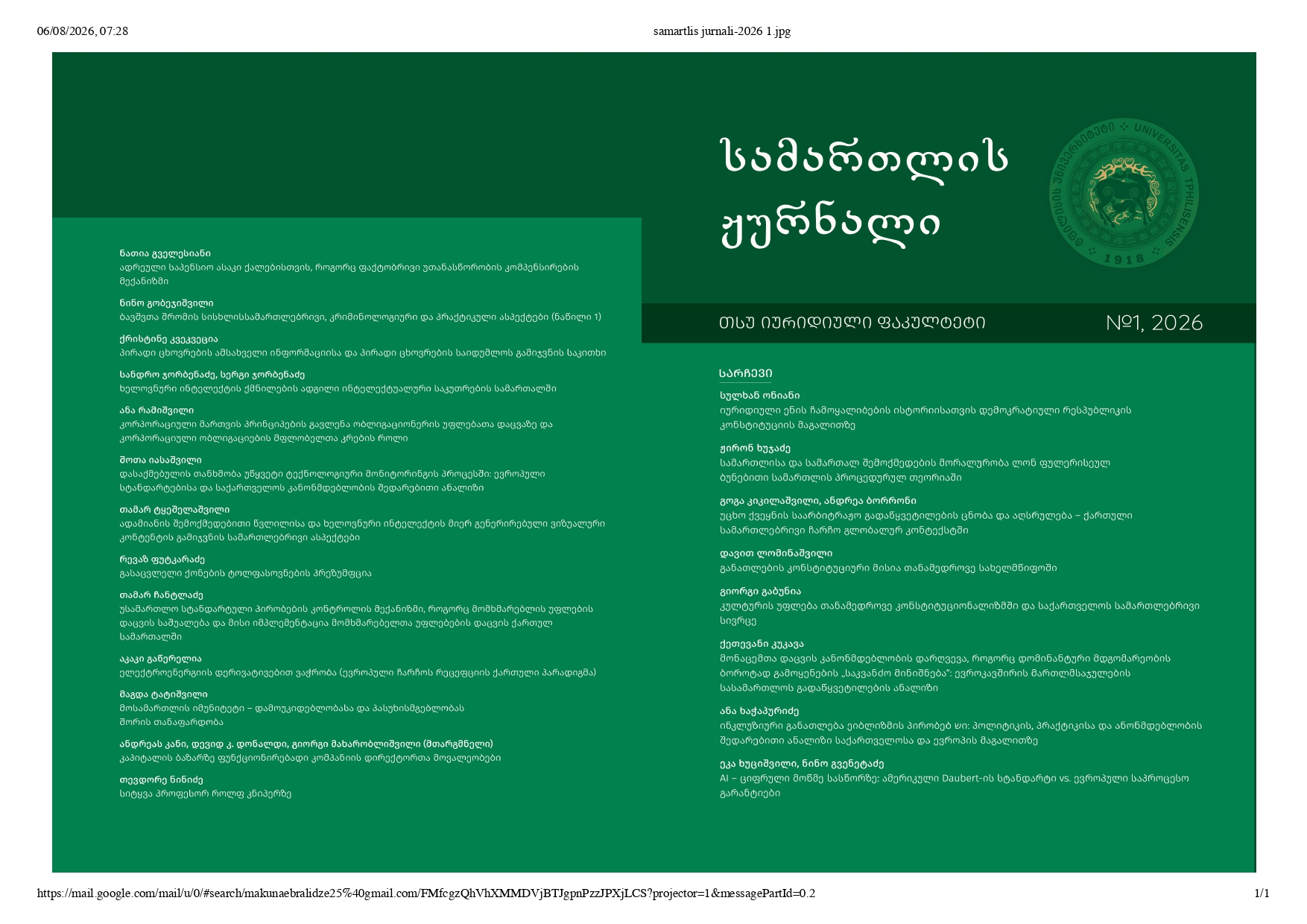
დასაქმებულის თანხმობა უწყვეტი ტექნოლოგიური მონიტორინგის პროცესში: ევროპული სტანდარტებისა და საქართველოს კანონმდებლობის შედარებითი ანალიზი
DOI:
https://doi.org/10.60131/jlaw.1.2026.11883საკვანძო სიტყვები:
თანხმობა, პერსონალური მონაცემები, შრომის სამართალი, UAM მონიტორინგი, GDPR, პროპორციულობა, DPIA, LIA.ანოტაცია
წინამდებარე კვლევა ეთმობა დასაქმებულის თანხმობის, როგორც პერსონალურ მონაცემთა დამუშავების სამართლებრივი საფუძვლის, ვალიდურობის კრიტიკულ შეფასებას სამუშაო სივრცეში უწყვეტი ტექნოლოგიური მონიტორინგის (UAM) პირობებში. კვლევის ამოსავალ წერტილს წარმოადგენს შრომით ურთიერთობებში არსებული ძალაუფლების სტრუქტურული ასიმეტრია, რომელიც არსებითად გამორიცხავს ნების თავისუფალ გამოვლენას და თანხმობის ინსტიტუტს იურიდიულ ფიქციად აქცევს. ეროვნული შრომითი და მონაცემთა დაცვის კანონმდებლობის (საქართველოს შრომის კოდექსი, „პერსონალურ მონაცემთა დაცვის შესახებ“ 2023 წლის კანონი), ასევე ადამიანის უფლებათა ევროპული სასამართლოსა (Bărbulescu v. Romania, 2017; López Ribalda v. Spain, 2019) და ევროკავშირის მართლმსაჯულების სასამართლოს (CJEU, საქმე C-34/21) პრეცედენტული სამართლის სინთეზური შესწავლის საფუძველზე, ნაშრომში დასაბუთებულია, რომ ციფრული ზედამხედველობის ლეგიტიმაციისთვის მხოლოდ თანხმობა არასაკმარისია. ხაზგასმულია ალტერნატიული მექანიზმების - ლეგიტიმური ინტერესის სამეტაპიანი შეფასების (LIA), პროპორციულობის ტესტისა და მონაცემთა დაცვაზე ზეგავლენის სავალდებულო შეფასების (DPIA) აუცილებლობა. დამატებით, ნაშრომი აანალიზებს 2026 წლის 2 მარტიდან ამოქმედებულ ინსტიტუციურ ტრანსფორმაციას, რომლის მიხედვითაც პერსონალურ მონაცემთა დაცვის სამსახურის (PDPS) მანდატი სახელმწიფო აუდიტის სამსახურს მიენიჭა.
ლიტერატურა / წყაროების მითითება
1. Law of Georgia "On Personal Data Protection", June 14, 2023 (including the amendments of December 17, 2025); Organic Law of Georgia "Labor Code of Georgia", December 17, 2010 (consolidated version) (in Georgian).
2. Regulation (EU) 2016/679 of the European Parliament and of the Council of 27 April 2016 on the Protection of Natural Persons With Regard to the Processing of Personal Data and on the Free Movement of Such Data (General Data Protection Regulation ― GDPR), 2016.
3. Personal Data Protection Service, Guiding Recommendations for Small and Medium-Sized Enterprises, 2024 (in Georgian).
4. Shvelidze Z., "Characteristics of the Legal Status of an Employee under the Labor Code of Georgia", Labor Law, Collection of Articles I, ed. Zaalishvili V., Tbilisi, 2011, pp. 56-60 (in Georgian).
5. European Data Protection Board (EDPB), Guidelines 05/2020 on Consent Under Regulation 2016/679, 2020.
6. European Data Protection Board (EDPB), Guidelines 2/2019 on the Processing of Personal Data Under Article 6(1)(b) GDPR in the Context of the Provision of Online Services to Data Subjects, 2019.
7. Aloisi A., Gramano E., "Artificial Intelligence Is Watching You at Work: Digital Surveillance, Employee Monitoring, and Regulatory Issues in the EU Context", Comparative Labor Law & Policy Journal, 2019, 95, 104.
8. Armaroli I., Dagnino E., "A Seat at the Table: Negotiating Data Processing in the Workplace", Comparative Labor Law & Policy Journal, 2019, 36.
9. De Stefano V., "Negotiating the Algorithm: Automation, Artificial Intelligence, and Labor Protection", Comparative Labor Law & Policy Journal, 2019, 15, 19.
10. Eurofound, "Employee Monitoring: A Moving Target for Regulation", European Restructuring Monitor (ERM) Database, 2023, 95, 104.
11. Hendrickx F., Employment Privacy Law in the European Union: Surveillance and Monitoring, Antwerp-Oxford-New York, 2002, 45-47.
12. Hendrickx F., Privacy and Data Protection in the Workplace, 2022.
13. Kuner C., Bygrave L. A., Docksey C. (eds.), The EU General Data Protection Regulation (GDPR): A Commentary, Oxford University Press, 2020, 1234, 1237.
14. Decision of the Civil Affairs Chamber of the Supreme Court of Georgia of April 18, 2018, Case No. as-142-134-2017 (in Georgian).
15. Decision of the Civil Affairs Chamber of the Supreme Court of Georgia of September 29, 2017, Case No. as-247-235-2017 (in Georgian).
16. Ruling of the Civil Affairs Chamber of the Supreme Court of Georgia of April 28, 2010, Case No. as-864-1150-09 (in Georgian).
17. Hauptpersonalrat der Lehrerinnen und Lehrer beim Hessischen Kultusministerium, Case C-34/21, Court of Justice of the European Union (CJEU), 30 March 2023.
18. López Ribalda and Others v. Spain [GC], App. Nos. 1874/13 and 8567/13, European Court of Human Rights, 17 October 2019.
19. Bărbulescu v. Romania [GC], App. No. 61496/08, European Court of Human Rights, 5 September 2017.
20. Payne v. Western & Atlantic Railroad Co., 81 Tenn. 507, Supreme Court of Tennessee, 1884.
გამოქვეყნებული
ციტირების წესი
გამოცემა
სექცია
ლიცენზია

This work is licensed under a Creative Commons Attribution-ShareAlike 4.0 International License.