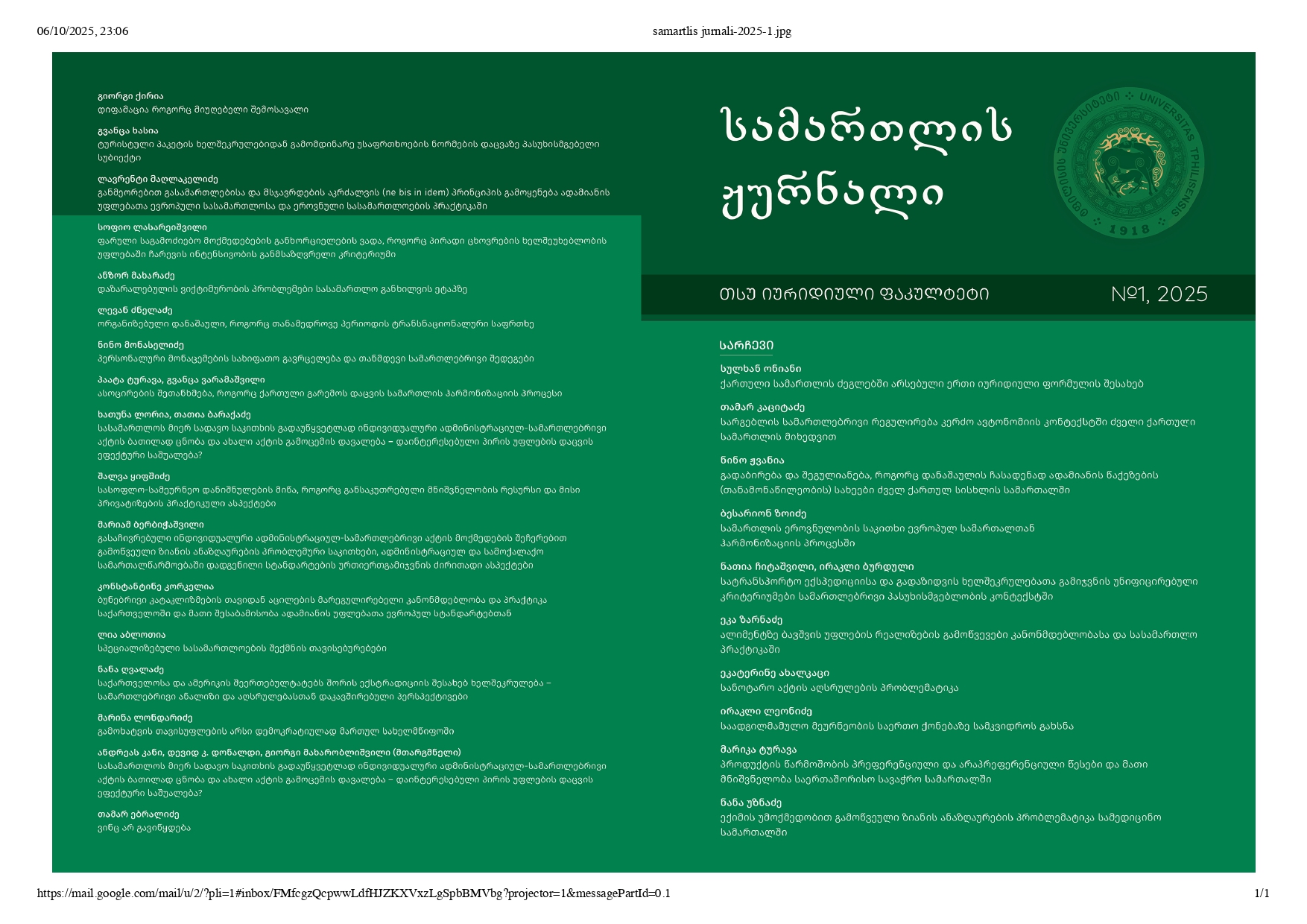
პროდუქტის წარმოშობის პრეფერენციული და არაპრეფერენციული წესები და მათი მნიშვნელობა საერთაშორისო სავაჭრო სამართალში
DOI:
https://doi.org/10.60131/jlaw.1.2025.9278საკვანძო სიტყვები:
თავისუფალი ვაჭრობა, მსოფლიო სავაჭრო ორგანიზაცია, ეკონომიკური ეროვნება, პროტექციონიზმი, არსებითი ტრანსფორმაცია, სატარიფო კლასიფიკაცია, პრეფერენციული მოპყრობა.ანოტაცია
წარმოშობის წესები (Rules of Origin) წარმოადგენს საერთაშორისო სავაჭრო სამართლის ქვაკუთხედს, რომელიც ემსახურება საქონლის კლასიფიკაციას წარმოშობის (,,ეკონომიკური ეროვნების‘‘) მიხედვით. წარმოშობის წესებს ფუნდამენტური მნიშვნელობა ენიჭება თავისუფალ სავაჭრო შეთანხმებებში, რომლებიც პრეფერენციულ რეჟიმში მონაწილე სუბიექტებისთვის არსებით სატარიფო და არასატარიფო პრეფერენციებს ითვალისწინებს (პრეფერენციული წარმოშობის წესები). ამასთანავე, წარმოშობის წესებს გადამწყვეტი მნიშვნელობა ენიჭება ისეთი სავაჭრო მექანიზმების გასატარებლად, როგორიცაა, ანტიდამპინგური ზომები, რაოდენობრივი კვოტები, სავაჭრო ემბარგო, მარკირების მოთხოვნები, და დამცავი ღონისძიებები (არაპრეფერენციული წარმოშობის წესები).
წინამდებარე სტატია იკვლევს წარმოშობის პრეფერენციული და არაპრეფერენციული წესების სამართლებრივ ჩარჩოს მსოფლიო სავაჭრო ორგანიზაციის (WTO) ფარგლებში. სტატიაში განიხილება წარმოშობის წესების ფუნდამენტური როლი თავისუფალი ვაჭრობის დინამიკის ფორმირებაში, ისევე, როგორც მათი გავლენა იმ სახელმწიფოთა სავაჭრო პოლიტიკაზე, რომელთა ხელშიც წარმოშობის წესები შესაძლოა იქცეს პროტექციონიზმის გატარების მექანიზმად და თავისუფალი ვაჭრობისა და კონკურენციის შემზღუდველ ,,ფარულ იარაღად‘‘. სტატიაში, ასევე, გაანალიზდება ის პრაქტიკული გამოწვევები, რომლებიც უკავშირდება წარმოშობის წესების გამოყენებას გლობალურ სავაჭრო რეჟიმებში.
ლიტერატურა / წყაროების მითითება
Association Agreement between the European Union and the European Atomic Energy Community and their Member States, of the one part, and Georgia, of the other part, 27/06/2014.
Agreement on a Deep and Comprehensive Free Trade Area (DCFTA) between Georgia and the European Union, 27/06/2014.
Resolution of the Parliament of Georgia No. 841 on accession to the International Convention on the Harmonized Commodity Description and Coding System, 23/12/2008.
Resolution of the Government of Georgia No. 453, "On Approval of the Criteria for Determining the Country of Origin of Goods, the Form of the Certificate of Origin, and the Procedure for Its Completion and Issuance", 16/09/2019.
Order of the Minister of Finance of Georgia No. 21, “On Approval of the National Commodity Nomenclature of Foreign Economic Activities (NCNO)”, 26/01/2024.
Agreement on Rules of Origin (ARO), Marrakesh Agreement Establishing the World Trade Organization, 15/04/1994.
General Agreement on Tariffs and Trade (GATT), Marrakesh Agreement Establishing the World Trade Organization, 15/04/1994.
International Convention on the Harmonized Commodity Description and Coding System, World Customs Organization, 1/01/1988.
Pan-Euro-Mediterranean Regional Convention on Preferential Origin, 26/03/2012.
Tokyo Round Agreements, Decision of the Contracting Parties of GATT on "Differential and More Favorable Treatment Reciprocity and Fuller Participation of Developing Countries", 28/11/1979.
Uruguay Round Agreements, Decision on "Measures in Favor of Least-Developed Countries", World Trade Organization, 15/04/1994.
Augier P., Gasiorek M., Lai Tong C., Martin P., Prat A., The Impact of Rules of Origin on Trade Flows, Economic Policy, Jul., 2005, Vol. 20, No. 43 (Jul., 2005), 567, 569-624.
Barcelo J.J., Harmonizing Preferential Rules of Origin in the WTO System (December 19, 2006), Cornell Legal Studies Research Paper no. 06-049.
Chase K. A, Protecting Free Trade: The Political Economy of Rules of Origin, International Organization, Summer, 2008, Vol. 62, No. 3 (Summer, 2008), 507-530.
Das R.U., Ratna R.S., Perspectives on Rules of Origin, 2011, First edition, Palgrave Macmillan.
De Wulf L., Sokol J.B., Customs Modernization Handbook, 2005.
Estevadeordal A., Suominen K., Rules of Origin in the World Trading System (2003).
Falvey R., Reed G., Economic Effects of Rules of Origin, Weltwirtschaftliches Archiv, Band 134, H. 2 (1998), 209-229, Published by: Springer.
Forrester I.S., EEC Customs Law: Rules of Origin and Preferential Duty Treatment, Part I, Reprinted from European Law Review Vol. 5, No. 3. June 1980.
Gourdon J., Gourdon K., De Melo J., A (More) Systematic Exploration of the Trade Effect of Product-Specific Rules of Origin, World Trade Review (2023), 22, 421–435.
Harilal K.N., Beena P.L., Reining in Rules of Origin-Based Protectionism: A Critique of WTO Initiatives, Economic and Political Weekly 40, no. 51 (2005): 5419–5427.
Inama S., Rules of Origin in International Trade, 2022.
Krajewski M., Wirtschaftsvölkerrecht, 4. Auflage, 2017.
LaNasa J.A. III., An Evaluation of the Uses and Importance of Rules of Origin, and the Effectiveness of the Uruguay Round's Agreement on Rules of Origin in Harmonizing and Regulating Them (1995), Jean Monnet Working Paper.
LaNasa J.A. III., Rules of Origin and the Uruguay Round's Effectiveness in Harmonizing and Regulating Them, The American Journal of International Law, Oct., 1996, Vol. 90, No. 4 (Oct., 1996), 625-640.
Matsushita M., Schoenbaum T.J., Mavroidis P.C., Hahn M., The World Trade Organization Law, Practice, and Policy, Third edition, 2017.
Nell P.G., WTO Negotiations on the Harmonization of Rules of Origin, 33 (3) Journal of World Trade (1999), 45-71.
Satapathy C., Rules of Origin: A Necessary Evil?, Economic and Political Weekly, 1998, Vol. 33, No. 35 (1998), 2270-2271.
Simpson J.P., Rules of Origin in Transition: A Changing Environment and Prospects for Reform, Law and Policy in International Business 22, no. 4 (1991): 665-672.
Van den Bossche P., Zdouc W., The Law and Policy of the World Trade Organization: Text, Cases, and Materials. 5th ed., Cambridge University Press, 2021.
Weiler J.H.H., Cho S., Feichtner I., Arato J., International and Regional Trade Law: The Law of the World Trade Organization, 2016.
Weiß W., Ohler C., Bungenberg M., Welthandelsrecht. 3. Auflage, 2022.
Kommerskollegium, Sweden, The Impact of Rules of Origin on Trade, 2012:1 – A Comparison of the EU's and the US's Rules for the Textile and Clothing Sector, National Board of Trade, March 2012.
United Nations Conference on Trade and Development (UNCTAD), Rules of Origin and Origin Procedures Applicable to Exports from Least Developed Countries, UNCTAD series, 2011, United Nations Publication.
World Customs Organization (WCO), Comparative Study on Preferential Rules of Origin, Version 2017, 20/06/2017.
World Customs Organization (WCO), Rules of Origin Handbook, 6/12/2012.
SDI Technologies, Inc. v. United States, 977 F.Supp. 1235 (Ct. Int'l Trade 1997), United States Court of International Trade.
Torrington Co. v. United States, 764 F.2d 1563 (Fed. Cir. 1985), United States Court of Appeals, Federal Circuit.
Territory of Hawaii v. Harry MY Ho., No. 3078, 41 Haw. 565, 571 (1957).
United States v. Gibson-Thomsen Co., 27 CCPA 267 (1940).
Anheuser-Busch Ass'n v. United States, 207 U.S. 556, 562 (1908).
Hartranft v. Wiegman, 121 U.S. 609, 615 (1887).
Downloads
გამოქვეყნებული
ციტირების წესი
გამოცემა
სექცია
ლიცენზია

This work is licensed under a Creative Commons Attribution-ShareAlike 4.0 International License.